Canon vs Epson Flatbed Scanner: Which Is Better? (November 2026)
Pick a Canon flatbed for high-resolution photos in a slim body, and a bulk Epson feeder for trays of old prints. In this Canon vs Epson flatbed scanner comparison, your mix of albums and loose photos decides the winner.
On this page (9 sections)
- Canon vs Epson flatbed scanner: which is better?
- Canon vs Epson flatbed scanner comparison table
- Resolution and image quality
- Speed and batch scanning
- Connections and where the scanner lives
- Software and photo tools
- Which scanner type fits your photos?
- Who should buy which?
- The verdict: Canon vs Epson flatbed scanner
Pick a Canon flatbed for high-resolution single photos in a slim body, and a bulk Epson feeder for trays of old prints. The top score goes to the Epson FastFoto FF-680W for most photo-heavy households, while the Canon CanoScan LiDE 400 is the better flatbed when quality per page matters.
Canon's LiDE line puts a high-resolution glass bed in a thin, light body. Epson's FastFoto FF-680W skips the glass for a sheet feeder that takes stacks of prints and scans both sides in one pass.
We compared the Canon LiDE 400, the Canon LiDE 300 and the Epson FF-680W on resolution, speed, color depth, connections and scanning tools. Prices change, so this comparison sticks to the specs.


Canon vs Epson flatbed scanner: which is better?
The Canon LiDE 400 is the better flatbed scanner; the Epson FF-680W is the better photo digitizer. That's the short answer, and it's why the Epson's 9.2 score wins overall for the typical shopper with a shelf of albums and a box of loose prints.
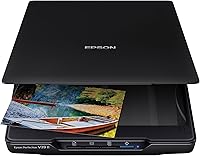
The Canon LiDE 400 is a true flatbed: you lift the lid, place a photo or document on the glass and close it. Its 4800 x 4800 dpi resolution and 48-bit color depth are the highest here, which matters for detailed photos and tight crops.
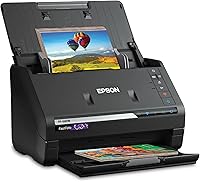
The Epson FF-680W is not a flatbed in the classic sense. It's a feeder scanner that pulls photos through at about 1 photo per second at 300 dpi and handles batches of up to 36.
Its optical resolution is 600 dpi, so it trades per-page detail for volume.
What the two approaches mean in daily use
A flatbed asks you to place each item by hand. That's slow for 300 prints but ideal for one wedding photo or a thick document you can't feed through rollers.
A feeder asks you to stack prints in a tray and let it run. That's fast for a shoebox of snapshots, and duplex scanning captures any handwriting on the back in the same pass.
Canon vs Epson flatbed scanner comparison table
The table shows where each model sits on resolution, speed, color depth and connection type. Read across the row for the spec that matters most to your photos.
| Product | Best for | Resolution | Color depth | Connection | Our score |
|---|---|---|---|---|---|
| Canon CanoScan LiDE 400 | high-resolution photos | 4800 x 4800 dpi | 48-bit | USB Type-C | 8.7 |
| Epson FastFoto FF-680W | scanning old photo batches | 600 dpi optical | 24 bpp | Wi-Fi and USB | 9.2 |
| Canon CanoScan LiDE 300 | budget everyday scans | 2400 x 2400 dpi | 48-bit | USB | 8.0 |
The Canon LiDE 400 leads on resolution and color depth. The Epson FF-680W leads on speed and batch size.
The Canon LiDE 300 sits below both on resolution but adds software tools the LiDE 400 lacks, like cloud sending.
If you only scan a handful of items each month, resolution and a small footprint matter more than a feeder. If you have years of prints to move into digital storage, speed and batch size decide the job.
Resolution and image quality
The Canon LiDE 400 wins on resolution with 4800 x 4800 dpi; the Epson FF-680W's 600 dpi optical suits everyday prints. For large enlargements or heavy cropping, more dpi gives you more to work with.
The LiDE 400 scans at 4800 x 4800 dpi with 48-bit color depth. That combination captures subtle color gradations in photos and gives you room to crop without visible pixelation.
The Epson FF-680W scans at 600 dpi optical and 24 bpp color depth. Its format options run 300 dpi for quick sharing, 600 dpi TIFF for archiving and 1200 dpi for enlarging.
The 1200 dpi setting is interpolated, so it's software-upscaled, not a true optical capture. For standard 4 x 6 prints, 600 dpi produces a faithful digital copy.
The gap opens when you scan small details or plan a large print from a 35mm slide or negative.
When 4800 dpi actually matters
Choose the LiDE 400 when you crop into a group photo to pull out one face. Also choose it when you want to reprint a 4 x 6 at 11 x 14 or bigger.
For a family album of snapshots destined for a shared drive or phone screen, the Epson's 300 dpi sharing mode is more than enough.
What color depth does for photos
The Canon's 48-bit color depth and 16-bit grayscale capture more tonal information per pixel. Faded prints benefit from more shades to work with before the scanner's color restore tools even run.
The Epson's 24 bpp color depth is standard for everyday photo and document scanning. It's fine for normal prints and documents, but the Canon's deeper capture gives you more room to correct a badly faded photo later.
Speed and batch scanning
The Epson FF-680W wins for volume by a wide margin: about 1 photo per second and batches up to 36. The Canon flatbeds scan one page at a time, though the LiDE 400's 8-second page speed is quick for a flatbed.
The Epson's headline number is about 1 photo per second at 300 dpi, measured from the start of a scan to the end of feeding. That's roughly 60 photos a minute on a smooth run, which turns a shoebox into a digital archive in an afternoon.
It also batch-scans up to 36 photos at a time, handles photos up to 8 x 10 inches and covers Polaroids, panoramas and postcards. The 10-sheet standard capacity in its specs is the document tray figure, so keep the photo batch size in mind when loading.
The Canon LiDE 400 scans a page in as fast as 8 seconds, with the included USB Type-C cable carrying both data and power. The LiDE 300 takes about 10 seconds per page.
Where the flatbed speed is enough
Eight seconds per page sounds close to the Epson's one second per photo, but the real gap is handling. You still open the lid, align the photo, close it, scan and remove it for each item on a flatbed.
For 20 photos, that's fine. For 2,000, the repeated placement dominates the time, and the Epson's stack feeding wins by hours.
The flatbed also handles awkward items like receipts, cards and pages still in a sleeve.
Connections and where the scanner lives
The Canon LiDE 400 uses one USB Type-C cable for data and power; the Epson FF-680W adds Wi-Fi. That changes where you can put the scanner and how you move photos off it.
The LiDE 400's single-cable design means no separate power brick. Its body measures 14.5 x 14.5 x 1.7 inches and weighs 3.6 pounds, so it stores upright or in a drawer between sessions.
The Epson FF-680W connects by Wi-Fi or USB and measures 11.7 x 11.7 x 6.9 inches at 8.2 pounds. It's a desktop feeder you leave in place rather than a scanner you tuck away.
USB-only scanning and your desk setup
An 8-second scan means the LiDE 400 works well next to a laptop at a desk. The trade-off is that neither Canon model goes wireless.
You scan where the computer is, not where the photos are. If the difference between a flatbed and a printer's built-in scanner is still fuzzy, our explainer on flatbed scanner vs printer scanner covers when a dedicated unit earns its desk space.
Wi-Fi scanning with the Epson
The Epson's Wi-Fi means the scanner can sit near the photo boxes while your computer stays in another room. Its Epson FastFoto app also lets you create slideshows and add voice or text over photos from your phone.
Wi-Fi also opens up instant sharing and backup to Dropbox and Google Drive as you scan. That's handy when you're scanning for relatives who want copies.
Software and photo tools
The Canon LiDE 400 and 300 both include auto enhancement; the Epson FF-680W adds a fuller restoration toolkit for old photos. The software matters as much as the hardware when your prints have faded.
The LiDE 400 ships with color restore and dust removal, so your photos look better after a scan without manual editing. It also has Auto Scan Mode that detects what you're scanning and a built-in PDF button for searchable multi-page files.
The LiDE 300 adds fade correction and dust reduction, plus a Send to Cloud button for OneDrive and Dropbox. It also scans and saves editable, searchable PDFs with OCR.
The Epson FF-680W's Precise Picture Imaging System goes further: auto enhancement, color restoration, red-eye reduction, de-skew, crop and rotate. For a box of 1980s snapshots, those tools save hours of manual correction.
Its duplex function is the quiet win: it captures the image and any handwritten notes on the back in a single scan, so family captions and dates travel with the photo.
Canon's EZ buttons and auto mode
Both Canon models use EZ buttons to launch common jobs. The LiDE 400 has five buttons and the LiDE 300 has four, both including a PDF shortcut and copy.
Auto Scan Mode is the most useful for mixed batches. Place a photo and the scanner detects it, so you spend less time tweaking settings per item.
If you're weighing what a flatbed does inside the box, our guide to how a flatbed scanner works explains the light, lens and sensor path that produces each scan.
Epson's restoration and sharing tools
The Epson's restoration tools target the specific damage in older prints. Color restoration revives faded dyes, red-eye reduction fixes flash photos and de-skew straightens a crookedly placed print.
Its Epson ScanSmart software also adds OCR for documents up to 240 inches and scan speeds up to 45 ppm/90 ipm. That makes it a competent document scanner when the photos are done.
Which scanner type fits your photos?
Choose a Canon flatbed for single photos, documents and fragile items; choose the Epson feeder for volume and duplex notes. The decision is about how your photos are stored and how many there are.
Canon's flatbeds are the better fit for framed prints, postcards and anything too thick or delicate for rollers. You control placement, and the glass handles odd shapes without a feed path.
Epson's feeder is the better fit for shoeboxes, albums and family archives. Stack 36 prints, run the batch and let duplex capture the backs.
It's also the only one here with Wi-Fi, which helps if the scanner lives away from the computer. All three models use CIS sensors.
A CIS light bar is compact and low-power, which is why the Canon flatbeds are so thin and light. If you plan to scan film or make large fine-art prints, look at a dedicated film scanner or a CCD model.
Our guide to what a CCD scanner is explains when the sensor type matters for photos.
Which Canon LiDE fits you
The LiDE 400's 4800 dpi and 8-second speed suit photos you might reprint. The LiDE 300's 2400 dpi and 10 seconds are enough for documents, receipts and casual photos, and it adds cloud sending.
Our Canon LiDE 300 vs 400 comparison breaks down the resolution gap and when the extra dpi pays off. For most homes, the LiDE 300 covers everyday scanning at a lower cost.
Who should buy which?
Buy the Epson FF-680W if you have a box or album of prints to digitize; buy the Canon LiDE 400 if you scan single photos at high detail. The third option, the LiDE 300, is the budget flatbed for documents and light photo use.
Pick the Epson FF-680W when volume and speed decide the project. About 1 photo per second, batches of up to 36 and duplex capture of photo backs turn an archive job into an afternoon rather than a month.
Wi-Fi and instant cloud backup help when you scan for the whole family. The Epson wins for anyone digitizing an album or a family collection, because the Canon flatbed would work but you'd handle every print twice.
Pick the Canon LiDE 400 when resolution per page matters more than volume. The 4800 x 4800 dpi and 48-bit color depth give you more to work with for enlargements and crops.
The single USB Type-C cable and 3.6-pound body suit a desk that doubles as a scan station. It's the choice when each scan is a single item that deserves the best resolution, like a wedding portrait or a piece of art.
Pick the Canon LiDE 300 when you scan documents and only occasional photos. Its 2400 dpi, PDF button and cloud sending cover everyday jobs at a lower cost.
It's the entry point if you don't need the 4800 dpi or the feeder.
The verdict: Canon vs Epson flatbed scanner
The Epson FF-680W is the best overall pick for most photo households, while the Canon LiDE 400 is the best flatbed scanner. The Canon's 4800 x 4800 dpi beats the Epson's 600 dpi optical, but the Epson's speed and duplex batch scanning make it the practical winner for albums and boxes of prints.
If your photos are stacked in boxes or albums and you want them digital fast, choose the Epson FF-680W. If you scan single photos, documents or delicate items and want the highest resolution per page, choose the Canon LiDE 400.
If you mostly scan paperwork and only occasionally a photo, choose the Canon LiDE 300.
One last thing to confirm before you buy: check that the scanner's connection type matches your computer. Both Canon models are USB only, while the Epson adds Wi-Fi.
For more on sensor types and how each scan is built, start with our flatbed scanner guide.
Frequently asked questions
Do these scanners use a CCD or CIS sensor?
All three use CIS sensors, which means a compact light bar and lower power draw. A CCD sensor captures more detail and depth for demanding photo work, so check for one if you plan to scan film or make large enlargements.
Can a flatbed scanner scan photo albums?
No, these flatbeds take one loose page at a time on the glass. For whole albums you need a scanner with an overhead camera or an album-capable model; for stacks of loose prints, the Epson FF-680W feeder is the practical option.
What resolution do I need for scanning photos?
For prints up to 8 x 10 inches, 2400 dpi is plenty for digital copies and moderate enlargements. Choose 4800 dpi when you plan to crop tightly or print large; the Canon LiDE 400 reaches 4800 x 4800 dpi.
Can these scanners work without a computer?
The Canon LiDE 300 and 400 use a USB cable to a computer, and the Epson FF-680W adds Wi-Fi but still runs through its app or software. None of the three works as a standalone scanner with its own screen.